Dear Parishioners,
In today’s Gospel, we see another aspect of prayer. Last week we considered prayer of THANKSGIVING– gratitude to God and one another. Jesus tells the story of two different men who went up to the Temple to pray – one a Pharisee, the other a tax-collector. Public opinion would say the Pharisee was a good man – in his own words: “I fast twice a week; I give away one-tenth of all I get. But he then spoils everything by condemning and judging the other person with him in the Temple. Note he makes the prayer to ‘himself’ – in the short prayer he uses the word ‘I’ six times! His prayer is that of reminding God how good he is! What kind of a prayer is that?
The other man, a tax-collector, was mixed up in corruption. Tax-collectors worked for the Romans occupying power and made sure the collected high taxes so that they could get a good cut. They had the might of the Roman Empire on their side.
Yet, this man is repentant. He knows he has nothing to offer to God only to throw himself at God’s mercy: he beat his breast and pleaded: “God be merciful to me, a sinner.” This is why Jesus said: “This man, I tell you, went home again at rights with God, the other man did not.” Why? ‘For everyone, who exalts themselves will be humbled and the person who humbles themselves will be exalted.
These words of Jesus would have shocked his listeners. Many would have honoured themselves by despising others. The great spiritual leader Mahatma Ghandi wrote: “It has been a mystery to me how men feel themselves honoured by the humiliation of their fellow beings.” These words came to him after an incident in South Africa where he practiced law – he was obliged to step into the gutter so that a group of white passers-by would not be contaminated.
In his life, Jesus was referred to as: “the friend of tax collectors and sinners.” This was because he cared about everyone – good and bad, rich and poor alike. But he couldn’t tolerate the self-righteous – Those who felt they were so good that they were above everyone else and God owed them everything.
We can learn from both characters. There is a ‘Pharisee’ lurking is all of us. Like him, we can be very conscious of the sins of others but blind to our own. We can learn from the tax collector. We can stand in humility before God too and ask: “God be merciful to me, a sinner.” When we grasp the fact that we are not perfect just yet; when we name our sins or failings; when we place ourselves in God’s mercy, then we are well on the way to being children of God. There is a Yiddish saying: “Better a sinner who know they are a sinner, than a saint who knows they are a saint.”
Have a blessed week, Fr Joe
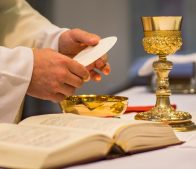




 St. John Vianney Catholic Church - West Green