TWENTIETH SUNDAY IN ORDINARY
REVISITING OUR SUNDAY OBLIGATIONS
Dear Brothers and Sisters in Christ, when l read the words from our first reading of today drawn from the Prophet Isaiah as follows: “(…) all who observe the Sabbath, not profaning it and cling to my covenant, these l will bring to my holy mountain, l will make them joyful in my house of prayer, their holocausts and their sacrifices will be accepted on my altar, for my house will be called a house of prayer for all the peoples. ” (Is 56: 6-7), l could not but reflect on our Christian commitment to keeping Sunday. Is Sunday just like any other day of the week? Just a day for sports and outing? What about those who take glory in following the mass online even when there is no obey to their attending the Eucharistic Celebration on Sunday? It is important that we re-examine our attitude towards the Day of the Lord, ‘Dies Domini’.
What did the Sabbath day mean to Israel? It meant ceasing work on the seventh day of each week but layer upon layer of theological meaning was wrapped into this. It was recognition of the fact that God was the Creator and the people were mere creatures. He was ultimately their provider and they undertook feverish activity for profit and self-preservation in vain. The Psalmist would confirm this by stating: ” If the Lord does not build the house, the labourers labour in vain and if he does not watch over the city, in vain does the watchman keep vigil.” (Ps 27:1).
Pope Saint John Paul the Great seeing that the respect for the Lord’s Day was diminishing, wrote the Apostolic Letter Dies Domini, On Keeping the Lord’s Day Holy in 1998 to re- enkindle in the hearts of Christians this holy duty towards God on Sunday. In the opening paragraph he writes: “The Lord’s Day — as Sunday was called from Apostolic times has always been accorded special attention in the history of the Church because of its close connection with the very core of the Christian mystery. In fact, in the weekly reckoning of time Sunday recalls the day of Christ’s Resurrection. It is Easter which returns week by week, celebrating Christ’s victory over sin and death, the fulfilment in him of the first creation and the dawn of “the new creation” (cf. 2 Cor 5:17). It is the day which recalls in grateful adoration the world’s first day and looks forward in active hope to “the last day”, when Christ will come in glory (cf. Acts 1:11; 1 Th 4:13-17) and all things will be made new (cf. Rev 21:5).” (DD 1). It is right therefore to claim the words of the Fourth Century Homily that the Lord’s day is “the lord of days” and to recall Saint Jerome’s emotional declaration: “Sunday is the day of the Resurrection, it is the day of Christians, it is our day.”
Sunday obligation reminds us of the third commandment which in a way embodies the first commandment that we honour just The Lord our God. This obligation helps to orientate us spiritually because Sunday marks the beginning of the Christian Week not the end. Sunday Mass prepares us for the days ahead and sets the spiritual tone for the week, filling us with God’s word and grace that we might glorify God with our lives. Moreover, by starting our week with the Sunday Liturgy, we publicly profess with our whole being that we are sons and daughters of God and members of the Church and that we are God’s first and that in him we live and move and have our being. (Acts 17:28). As such, all human life and time must become praise of the creator and thanksgiving to him, recalling that the universe and all of history belong to God and without a constant awareness of that truth, man cannot serve in the world as co-worker of the Creator (DD 15).
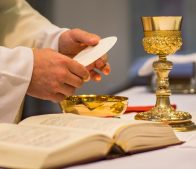
The Eucharistic Celebration on Sunday is the Sacred meeting place between God and man. The mass reorients our lives towards God, reunites us with him in love and thereby communicates the grace of salvation to our souls. In the long run, there can be nothing more productive than that.
In each Eucharistic Celebration, we must remember that we have to move from mass to mission. Mass does not stop at the Church door. The Final dismissal: “Go and announce the Gospel of Christ” and other forms are summons to evangelize and to bear witness. It is a responsibility to make our whole life a gift and a spiritual sacrifice pleasing to God. We must feel indebted to share what we have encountered and be in solidarity with others and let the light of Christ shine forth in our lives and illumine our communities and the world.
In Conclusion, the spiritual and pastoral riches of Sunday as it has been handed down to us by Tradition are truly great. When its significance and implementation are understood in their entirety, Sunday becomes a synthesis of the Christian life and a condition for living it well. (DD 81)
May we once more rediscover the richness of the Eucharistic Celebration on Sunday and remember our Christian duty to keep Sunday Holy.
Remain blessed in the Lord
Fr. Marcel Kofon



 St. John Vianney Catholic Church - West Green